
The Frustration of Accountability in Irish Politics
In recent years, public trust in political institutions has been eroded not just by scandals but by the increasingly common tactic of political gaslighting. This phenomenon, where political figures deny, downplay, or obscure facts in the face of clear evidence, has left the Irish public increasingly disillusioned. A striking example of this is the case involving Finance Minister Paschal O’Donohoe, whose alleged actions concerning the Occupied Territories Bill have sparked outrage and confusion.
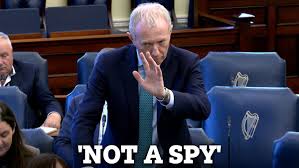
As reported by The Ditch, it is claimed that O’Donohoe engaged in conversations aimed at killing the Occupied Territories Bill through the tactical use of a “money message,” a legislative tool used to block bills that may require public expenditure. O’Donohoe denied these claims. However, records from the Israeli side reportedly contradict his version of events, suggesting that conversations indeed took place. Despite the presence of conflicting documentation, O’Donohoe remains largely unscathed, continuing in his role without any substantial consequence. This situation highlights a growing frustration in the public consciousness—a sense that politicians can engage in disinformation or manipulation with little fear of repercussion.
The Legal Vacuum: Where Are the Mechanisms for Truth-Seeking?
The Irish legal and political systems are designed to uphold accountability, yet they seem to fall short when it comes to holding politicians accountable for disinformation or deceptive practices. While Ireland has robust defamation laws to protect individuals from harmful false statements and legislation aimed at curbing disinformation in the media, there is a significant gap when it comes to investigating and addressing disinformation or manipulation by elected officials themselves.
Ireland’s Ethics in Public Office Act 1995 and Standards in Public Office Commission (SIPO) are designed to ensure transparency and ethical conduct among politicians. However, these frameworks are often viewed as toothless when it comes to actually enforcing accountability. In the O’Donohoe case, for example, despite documentary evidence from external sources contradicting his public statements, there appears to be no immediate mechanism to investigate the truth and hold him accountable.
The Oireachtas Committee system, while sometimes tasked with investigating claims of misconduct, rarely seems to deliver the kind of rigorous inquiry needed in such cases. And without a proper investigatory mechanism that can pursue these issues independently and with full transparency, politicians like O’Donohoe are free to offer denials and carry on without consequence.
A Public Tired of Gaslighting: Erosion of Democratic Trust
This lack of accountability fosters a sense of betrayal in the public. For citizens who expect transparency and truth from their leaders, it feels like a direct affront when clear contradictions are swept under the rug. The very idea of democracy rests on the principle of trust between the public and their representatives. When that trust is eroded by gaslighting and a refusal to acknowledge documented facts, the democratic system itself begins to falter.
In the case of the Occupied Territories Bill, the stakes are even higher. This bill touches on significant moral and ethical concerns, particularly regarding Ireland’s stance on human rights and international law. For the Irish public, the idea that their government might be engaging in back-channel conversations with a foreign state to kill such important legislation is deeply troubling. And yet, the complete lack of accountability when these allegations are raised leads to frustration, helplessness, and cynicism.
The constant gaslighting from political figures creates an environment where truth becomes flexible, and where politicians can manipulate public perception with denials and half-truths. This leaves the public feeling disconnected from the very systems they rely on to protect their rights and interests.
The Need for Stronger Mechanisms of Accountability
The Paschal O’Donohoe case, along with numerous other instances of political disinformation, highlights an urgent need for reform. Ireland must strengthen its mechanisms for investigating political figures who are accused of disinformation, especially when documentary evidence contradicts their public statements. To restore public trust and ensure democratic integrity, the following measures could be considered:
- Independent Investigatory Bodies: Strengthening or creating an independent body with the power to investigate allegations of political disinformation. This body should have the authority to subpoena documents, interview witnesses, and issue reports publicly to ensure transparency.
- Strengthening SIPO: The Standards in Public Office Commission (SIPO) needs greater power to investigate political disinformation, with the ability to impose meaningful sanctions on those found guilty of misleading the public.
- Whistleblower Protections: Encouraging and protecting whistleblowers within political institutions who come forward with evidence of disinformation or unethical behavior by their colleagues.
- Public Inquiries: Ensuring that significant allegations, especially those involving potential foreign interference or collusion, are subject to public inquiry. The findings should be made public to ensure accountability.
The Public Deserves Better
Irish citizens are tired of being gaslit by their political representatives. Cases like that of Paschal O’Donohoe and the Occupied Territories Bill are not isolated incidents; they are emblematic of a wider problem where political elites are able to manipulate the truth without facing consequences. The erosion of public trust is one of the most dangerous threats to a functioning democracy, and without stronger legal mechanisms for accountability, this trend will only continue.
If politicians can continue to deny documented facts and obscure the truth, all while carrying on with impunity, then democracy itself is at risk. The public deserves better. We deserve a political system that values transparency, that holds its leaders accountable for disinformation, and that restores trust by consistently seeking the truth. Only then can the cycle of political gaslighting be broken, and democracy truly serve its people once again.